I’m lucky to live within easy walking distance of an extensive tract of parkland along the winding North Saskatchewan river. This has on occasion caused me to complain about the deer wandering up and helping themselves to my garden veggies. It’s fair play though because I take advantage of the bounty in the deers’ backyard.
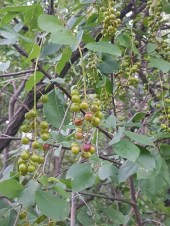
For instance, the ravine trail we walk our dog along is lined with saskatoons and choke cherries.
There are also wild carrots, patches of wild asparagus, and stands of beaked hazelnuts. All of these are on a well used track, yet most people pass by without ever noticing this bounty of wild food.
Alberta has many wild plants with edible parts. You just have to know what to look for. The saskatoon enjoys favoured foodie status right now so even those who didn’t grow up here likely recognize it. I did grow up here and know many summer berries well enough to feel absolutely safe eating them, but my knowledge sadly stopped at berries.
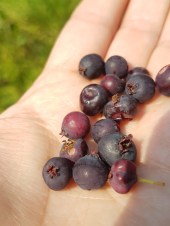
Hubby and I picked up an excellent guide to help us identify berries, which are bountiful right now. We’ve been going on weekend foraging expeditions to some land where he where he hunts in the fall.
It’s a densely wooded area so we only saw a few saskatoons in the meadows where it was warm and sunny.
The trail is lined with thick stands of beaked hazel nuts – considerately trimmed to my height by the local moose population. The bracts are still green, but they’ll dry and split open soon.

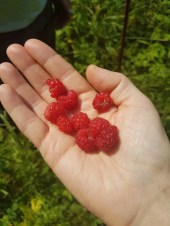
Raspberries are plentiful. I usually tell people I don’t like raspberry, but truthfully it’s just the domestic sort I don’t like. Wild raspberries are delicious. Less raspberry-like, if that makes any sense (of course it doesn’t). More sweet, less odd tangyness.
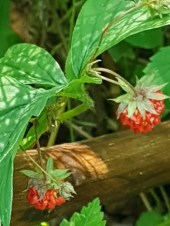
We also found tiny wild strawberries hidden in the trail edges. These are only about 1 cm across, but are packed with sweetness.
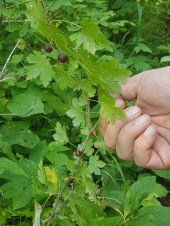
Thanks to our new guidebook I learned I’ve been mistaken about a wild berry I’ve always eaten. It’s ok though, the berry I mistook it for is also highly edible. I always thought we were munching on gooseberries, but it appears that they’re actually currants. The leaves and the fruit look so much alike and taste similar enough that the distinction doesn’t matter to the forager. It would matter only to the botanist.
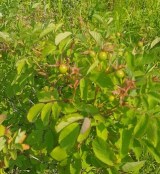
There were rose hips everywhere; oblong, round, green, rosy pink. There are at least three varieties of wild rose growing in my province. One, rosa acicularis, is Alberta’s provincial flower.
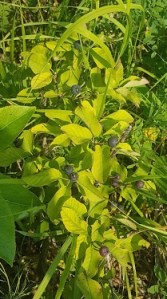
I also found plants in the meadow that I didn’t dare try.
I saw what I suspected were blueberries but didn’t want to risk the nearby ant hill to get a closer look. Zooming in on the photo I am now pretty certain they are huckleberries because they lack the powdery whitish skin of blueberries. Both are highly edible. The other berry with this look is the whortleberry, which is also highly edible but the leaves on this shrub didn’t match.
I identified bunchberry and bush cranberry using my photos when I got home. They’re both edible but I’ve never tried them.
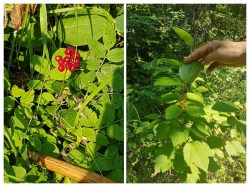
We also identified some berries to avoid.
Wild lily of the valley, sarsaparilla, and false solomon’s seal, which are either not palatable or some guides caution against.
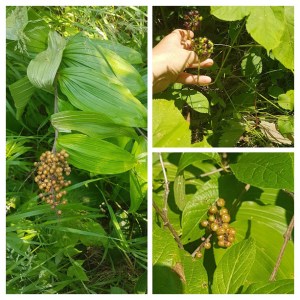
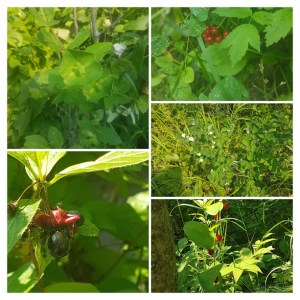
Snowberries, honeysuckle, twisted stalk, twin berry, and red bane berry are all toxic.
We want to expand our wild food knowledge beyond berries. This fall we’re planning a fishing trip and I am hoping we can forage some wild greens to add to a camping dinner. I’ll keep you posted.
 Make me eat my words.